In this post I want to discuss my process of mixing the second and final track. I used the same mixing workflow as in my post about mixing the first track as I found it worked very effectively. Ciaran sent me his recordings of vocals, guitar, flutes and bass guitar, as well as some additional VST drums. He also offered to help out with the mixing process a little by editing timing issues and adding effects to the guitar tracks. After receiving these I reminded him that I’d also wanted some material to use in the end section of the track, so he went on to send me improvised guitar and flute recordings which I chopped up and arranged.
During the process I was struggling more with the vocals in comparison to the last track, in particular as they had a wide dynamic range, so I decided to do some research on mixing vocals. In an interview with Neil Rogers (2019), Jack Ruston expressed the importance of having a vocal style which matches the track, for example if the vocal timbre is too soft and has to be made louder to compete with a large track, this will cause some incongruence. Ciaran always double tracks his vocals out of personal preference, and though I had originally decided to have only one track of vocals heard in the verses I decided to bring the second back in as well as this is quite a busy track which needed larger and less intimate vocals. In the same interview, Boe Weaver explain how they make an effort to not get lazy with vocal mixing and the importance of remembering that what works may change each time, so starting with whatever has worked well previously may not be ideal. I took this into account by treating the process of mixing vocals differently from last time, for example I added a tape delay to add more space and less intimacy to fit the mood of the track. I also used this tape delay on other parts of the mix such as the flutes. I still used parallel compression like I did last time as I like how it subtly adds thickness. The most highlighted point from the interview was that micro-managing vocal levels is very important, so I made sure to spend extra time automating the vocal line (mostly by drawing it in while listening) after I had achieved a good static balance of all the tracks.
Cooper (2011) recommends when mixing a lead vocal to use a de-esser first to remove sibilance and following with a soft-knee compressor to control the dynamics before doing any EQ. I usually add a de-esser in later on if I think the vocal sounds too harsh which is what I did with this mix, but I will try out using it first in the future. In contrast, Kindred believes compression is all about developing the sonic character of the vocals rather than minimising how much automation is needed (Rogers, 2019). This further emphasises to me that automation is the most important step in controlling dynamics, so this has changed my mixing approach to rely less on compression to achieve a consistent sound.
The final piece of advice I came across which stood out to me was from Dave Pensado, who believes that you are never done with a mix, you just run out of time to work on it (Droney, 2004). This helped me with time management of this mixing process as I realised there is only so much you can work on a track before you stop seeing significant improvements, and it is then time to consider it finished, even if it isn’t perfect. I think this approach has saved me a lot of time rather than taking ages to tweak small details.
Here are screenshots of my mixer when I was mostly finished with the process:
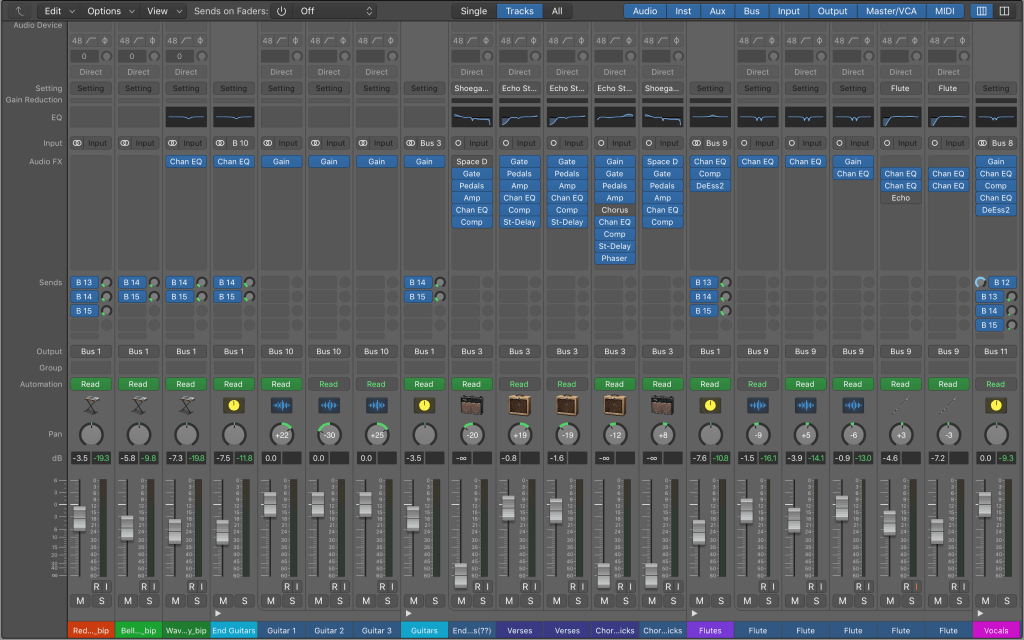
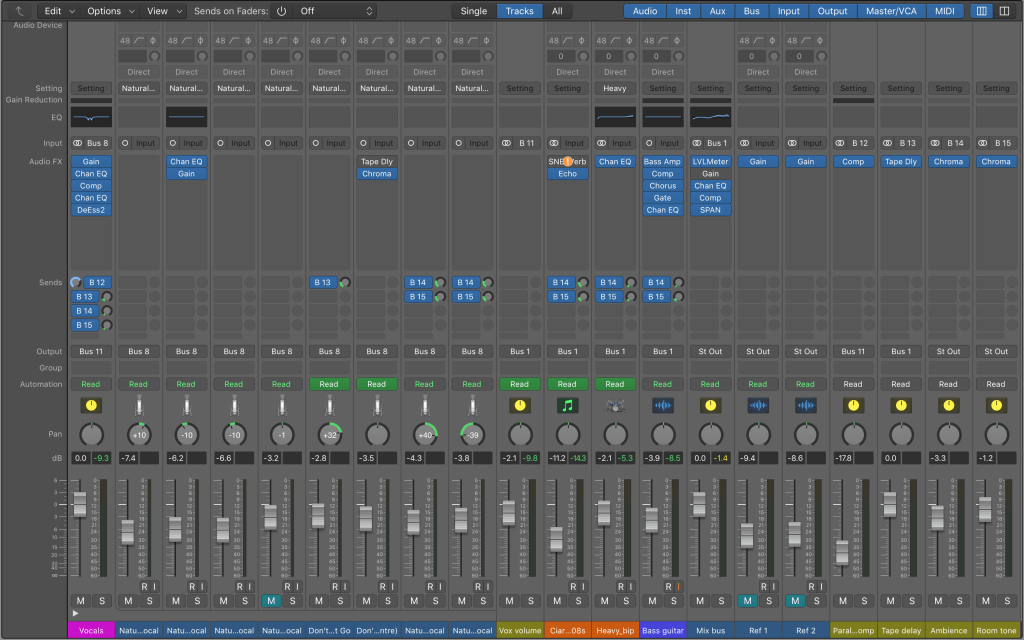
In the next post I will discuss how I mastered both tracks and why I decided to master them myself instead of using AI mastering or working with a mastering engineer.
References:
Cooper, M. (2011). Mixing the Ultimate Lead Vocal, pt. 1. Electronic Musician, Vol 27(8), pp. 80-82.
Droney, M (2004). Mixing Strategies of the Pros: 3 Top Engineers Take You Inside the Mix. Electronic Musician, [online] Vol. 20(5), pp. 42-61.
Rogers, N. (2019). How Engineers Get Vocals to ‘Sit Right’ in a Mix. [online] Soundonsound.com. Available at: https://www.soundonsound.com/techniques/how-engineers-get-vocals-sit-right-mix [Accessed 3rd May 2020].
 Damon Siseman MUS634